Construction chemicals · RDP
Redispersible Polymer Powder Spray Dryer
Spray drying lines that turn polymer emulsion into redispersible powder for dry-mix mortar, from 100 to 700 kg/h, with 99.8% powder recovery and automatic additive dosing.
Process
Freeze the emulsion droplets into powder.
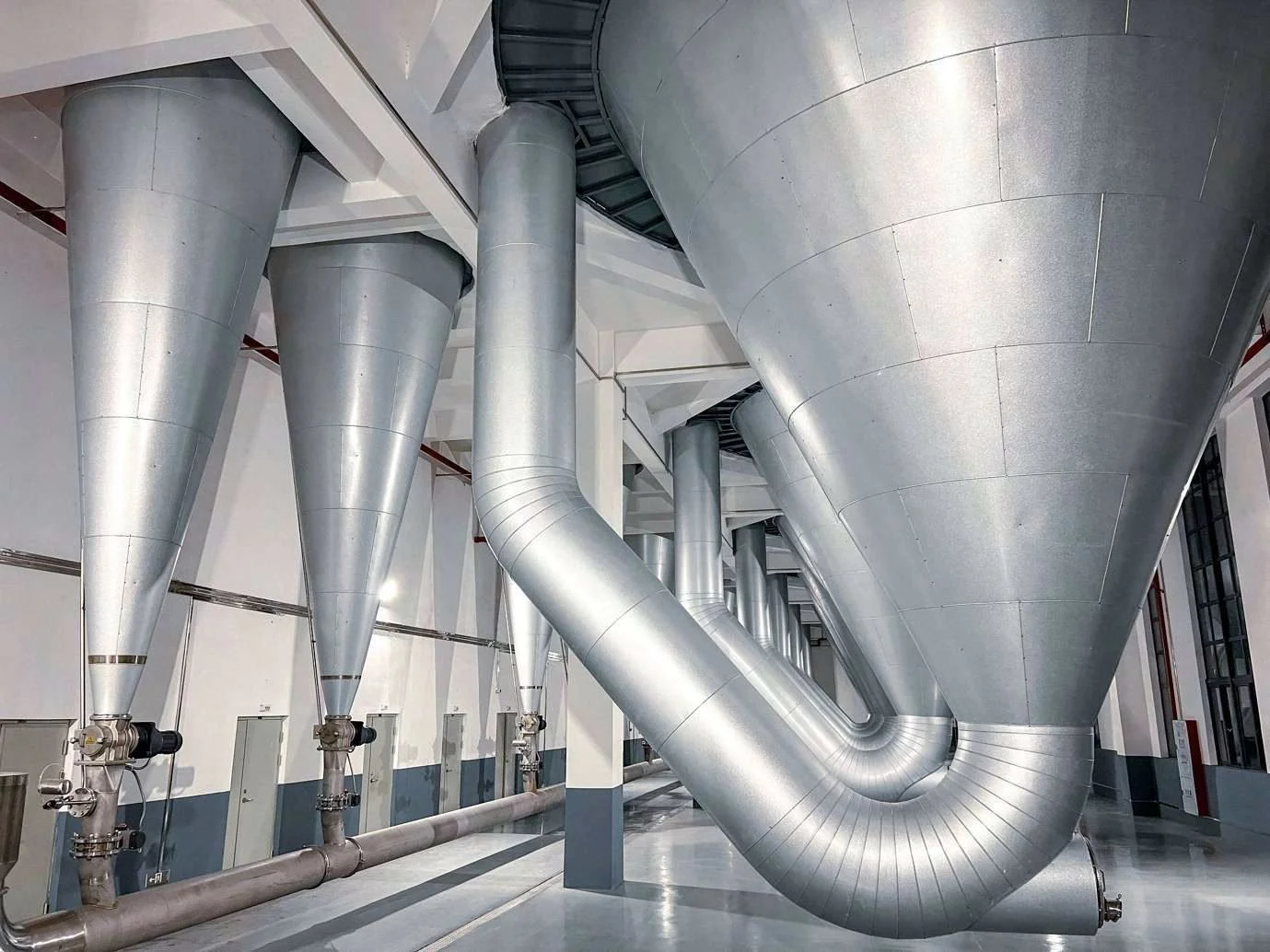
A screw pump feeds the polymer emulsion to the atomizer. Drying takes a few seconds, so the droplet distribution is frozen and the protective colloid stops the polymer particles from coalescing. An anti-caking agent is added during or after drying.
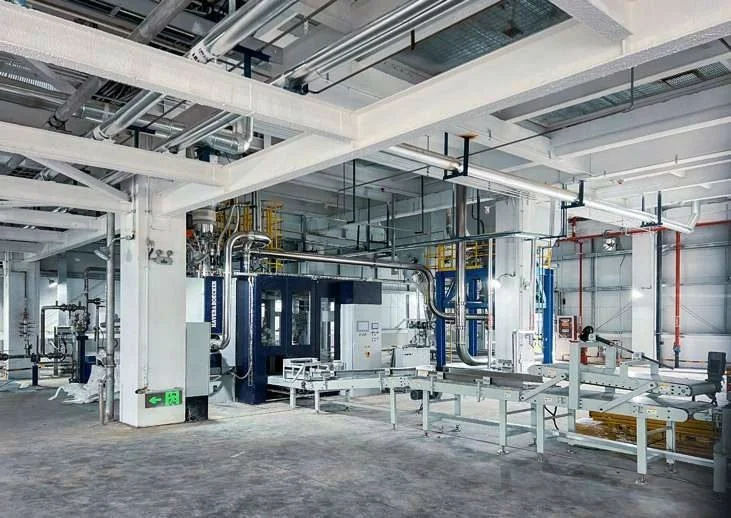
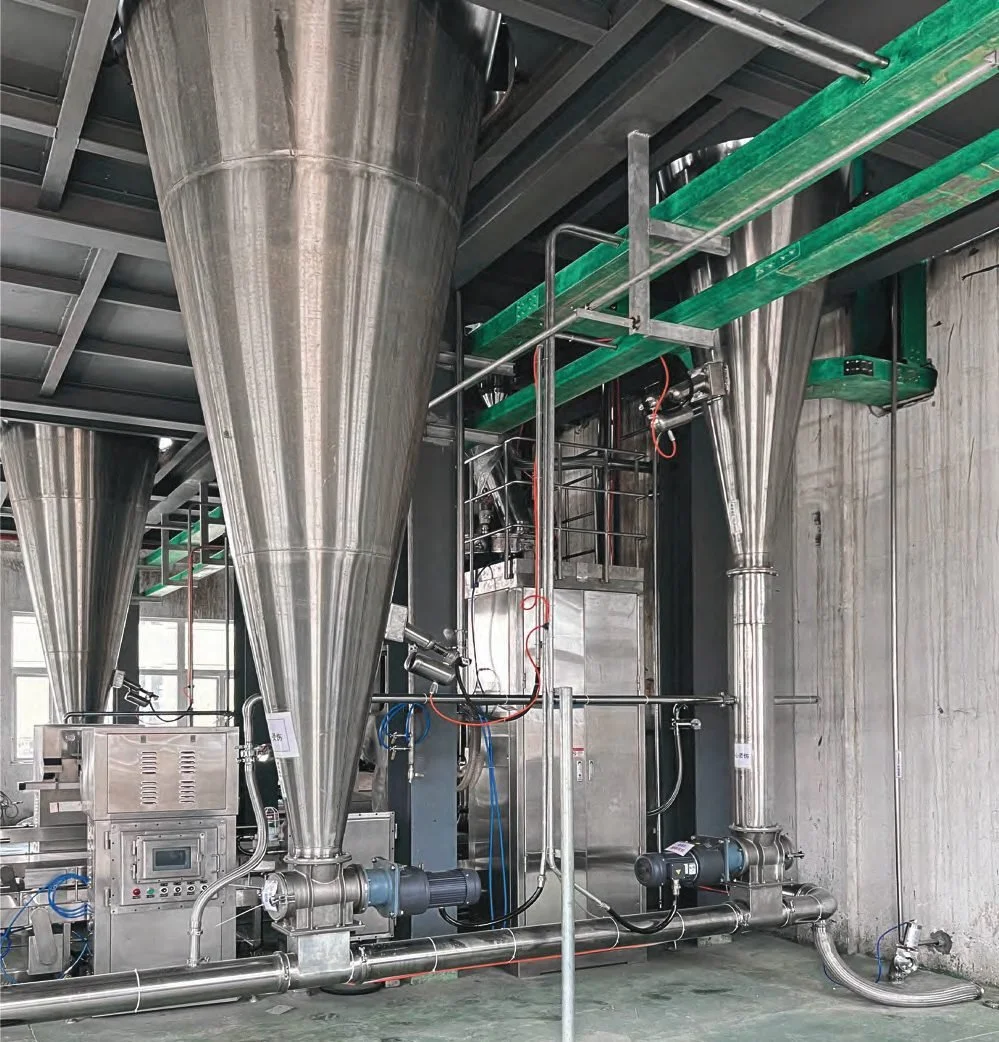
Powder is conveyed from the tower bottom to a bag filter, screened, de-ironed and sent to the silo for automatic packing. Two weighed feeders dose auxiliary materials at the tower top.
- Inlet 100–200 °C, outlet 60–80 °C
- Good flowability and controlled particle size
- Rapid drying prevents caking in storage
- Automatic feeding, discharge and additive dosing
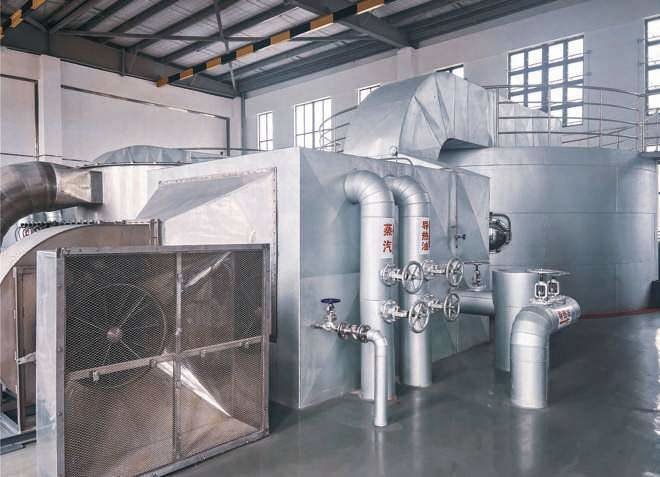
- Gas, diesel, superheated steam or biomass heat
Reference case
RDP plant for Oriental Yuhong, 2017
| Feed | Polymer emulsion |
|---|---|
| Powder output | 100–700 kg/h |
| Solids content | 30–42% |
| Atomization | High-speed centrifugal atomizer |
| Recovery | Two-stage bag filter, 99.8% |
| Additives | Two automatic weighed feeders at the tower top |
| Powder handling | Air conveying, vibrating screen, iron removal, silo, auto packing |
| Heat source | Natural gas, diesel, superheated steam or biomass |
| Control | PLC |
Figures from a delivered plant.
FAQ
Questions about this application
What capacities do you build for RDP?
Typical lines produce 100–700 kg/h of powder. We also built the control system for a 20,000 t/y RDP line for Bosson Chemical.
How is caking prevented?
Fast drying keeps the particles separate, and an anti-caking agent is dosed automatically during or after drying.
Next step
Send us your material. We will size the dryer.
Tell us the material, solids content and the capacity you need. An engineer replies within one working day, and we can run a trial on your sample in our test center.