
High-pressure nozzle atomization
Pressure Spray Dryer
A high-pressure pump forces the feed through a nozzle at 10–250 bar. The result is a coarse, free-flowing powder with high bulk density that dissolves without clumping.
How it works
Coarse droplets for powders that pour and dissolve.
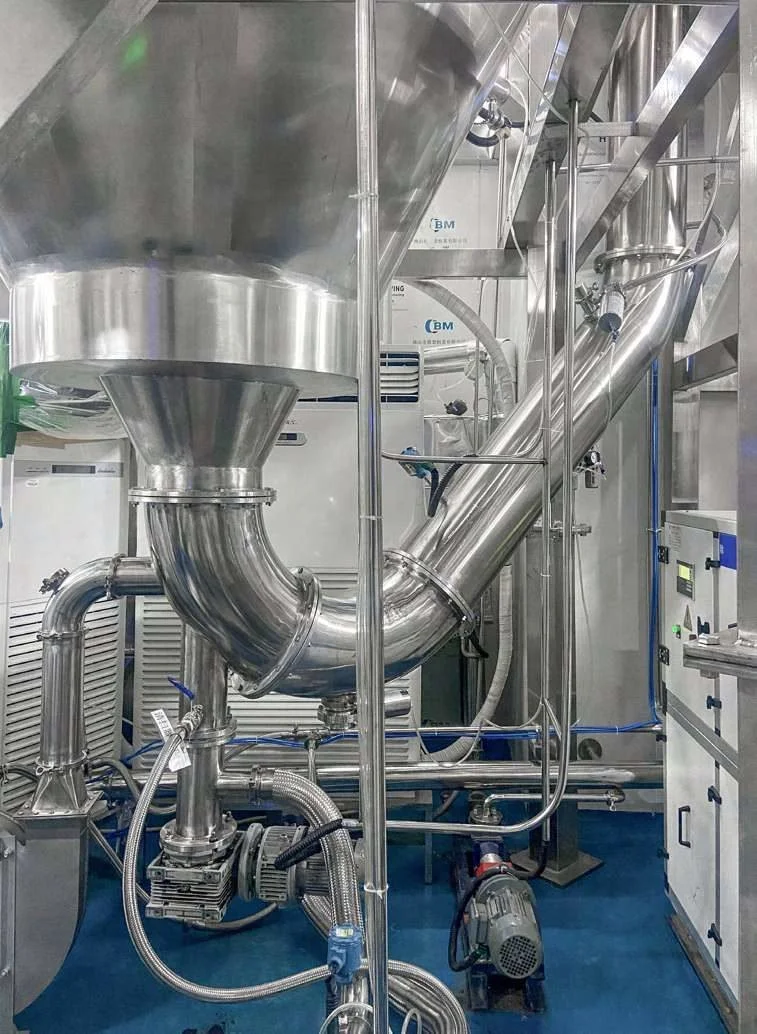
A homogenizer or diaphragm pump drives the feed through a small nozzle orifice. The liquid leaves as a hollow cone of droplets that are larger than a rotary atomizer makes, so the powder is coarser and denser.
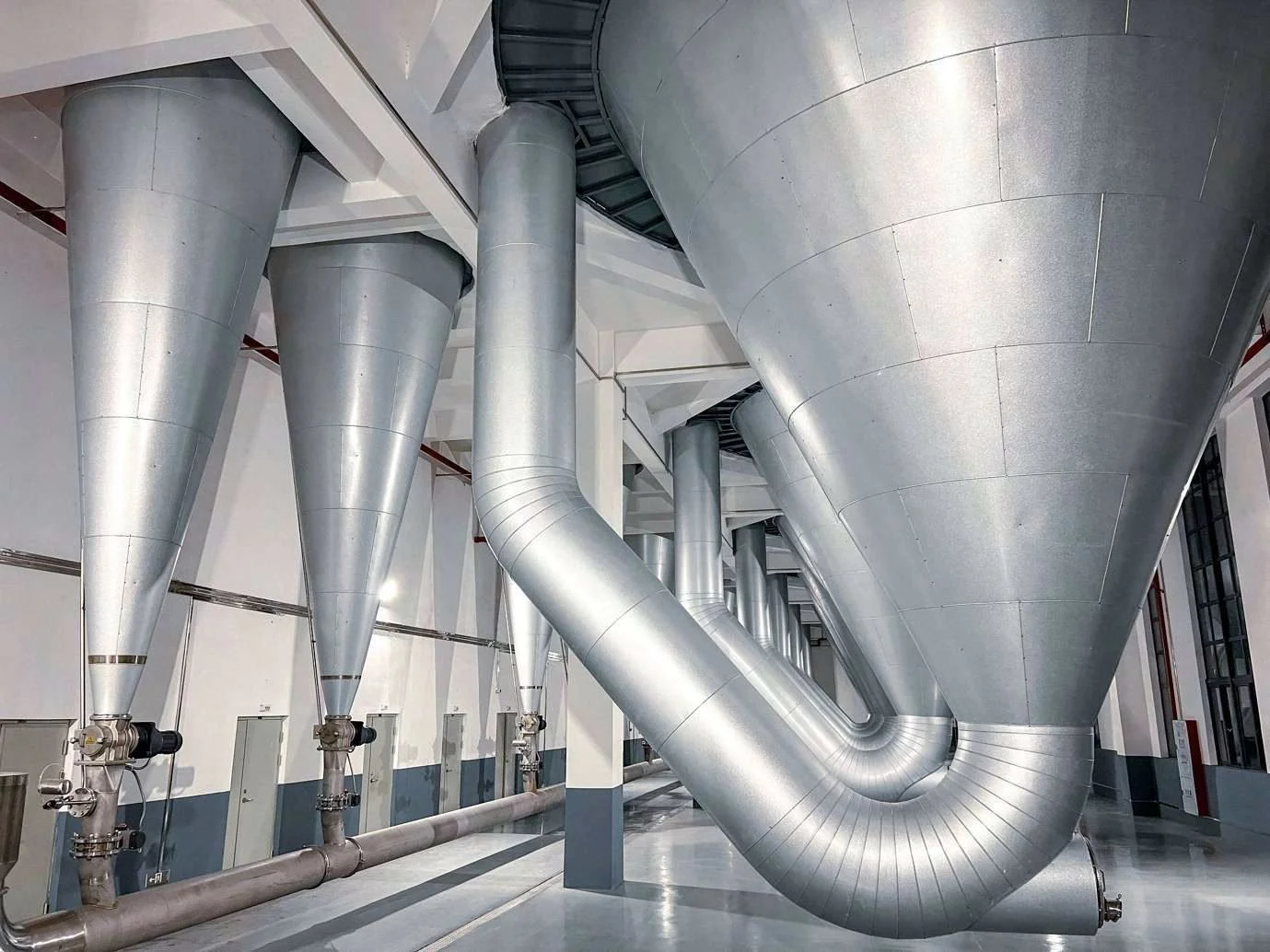
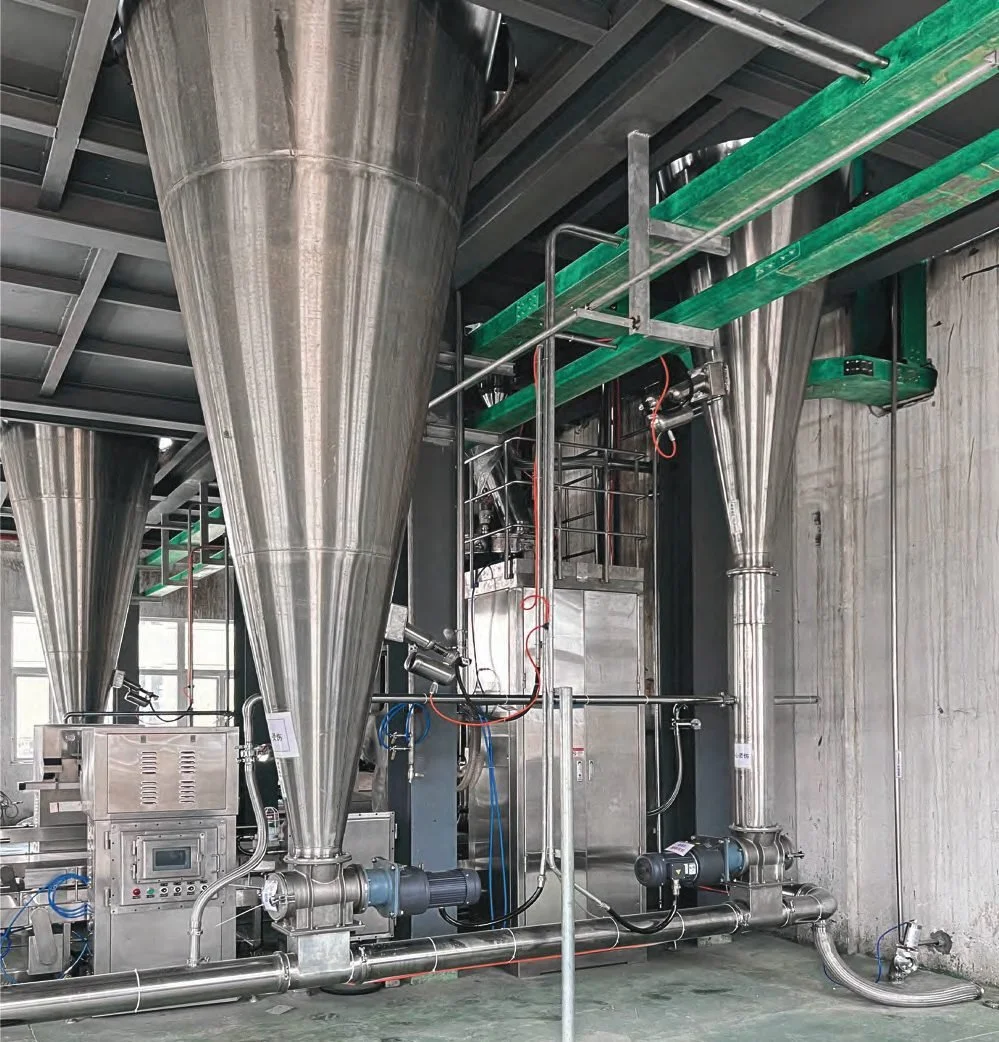
Larger droplets need a longer fall to dry, so pressure towers are tall, with a cylinder usually over 10 m. Several nozzles can run in one tower for higher capacity.
- Coarse, dust-free powder with high bulk density
- Faster wetting: less floating and clumping in water
- Handles both low and high viscosity feeds
- Simple metal nozzle assembly, no moving parts in the tower
- Pressure adjusts droplet size and drying behaviour
Process
From liquid feed to powder
- Prepare the feedThe concentrate is mixed and filtered; anti-caking agents can be added here.
- PressurizeA high-pressure pump raises the feed to 10–250 bar.
- AtomizeNozzles at the tower top form a hollow cone spray.
- DryDroplets dry as they fall through the tall cylinder.
- CollectPowder leaves the cone; fines are recovered by cyclones and bag filters.
Reference case
Protein powder line, pressure type
Guangzhou Hairui Pharmaceutical, QZR-50 series, with dual CIP tanks.
| Feed solids | 35% |
|---|---|
| Water evaporation | 200 kg/h |
| Liquid spray rate | 308 kg/h |
| Powder output | 108 kg/h |
| Inlet / outlet air | 180–190 °C / 90 °C |
| Final moisture | ≤ 5% |
| Particle size | Mostly 180–250 µm |
| Heat source | Steam heat exchanger + electric heater |
| Exhaust treatment | Two-stage cyclone + water film scrubber |
| Control | PLC touch screen |
Figures from a delivered plant. Your design is sized to your material.
Typical materials
What pressure spray dryers are used for
Dairy and protein
Food
Detergents and chemicals
Ceramics
Information we need
What to send us for a quotation
We do not sell spray dryers from a fixed model list. Every dryer is sized to the material, so these are the details our engineers ask for first.
| Material | Name, and what the powder is used for |
|---|---|
| Feed | Solids content (%), viscosity, temperature, solvent (water or organic) |
| Capacity | Powder output or water evaporation in kg/h, operating hours per day |
| Powder spec | Final moisture, particle size range, bulk density |
| Heat sensitivity | Maximum product temperature, if known |
| Site | Available heat source (steam, gas, electric, thermal oil) and building height |
If you are not sure about a value, leave it blank and we will work it out with you, or test a sample.
FAQ
Questions about this dryer
When should I choose a pressure nozzle over a centrifugal atomizer?
When you need coarser powder (about 48–250 µm), high bulk density or fast dissolving, as with protein, coffee and detergent powders, or when the feed is viscous.
What is the maximum capacity?
Our pressure spray dryers reach 20 t/h. One nozzle handles up to about 1,000 L/h, so larger plants use several nozzles.
Does the nozzle block?
The orifice is small, so operators watch for blockage and filter the feed. The nozzle is a simple metal assembly that is quick to change.
Why is the tower taller?
Larger droplets need a longer fall to dry. Pressure towers usually have a cylinder over 10 m tall.
Next step
Send us your material. We will size the dryer.
Tell us the material, solids content and the capacity you need. An engineer replies within one working day, and we can run a trial on your sample in our test center.