
Ceramics · Spray granulation
Ceramic Spray Dryer
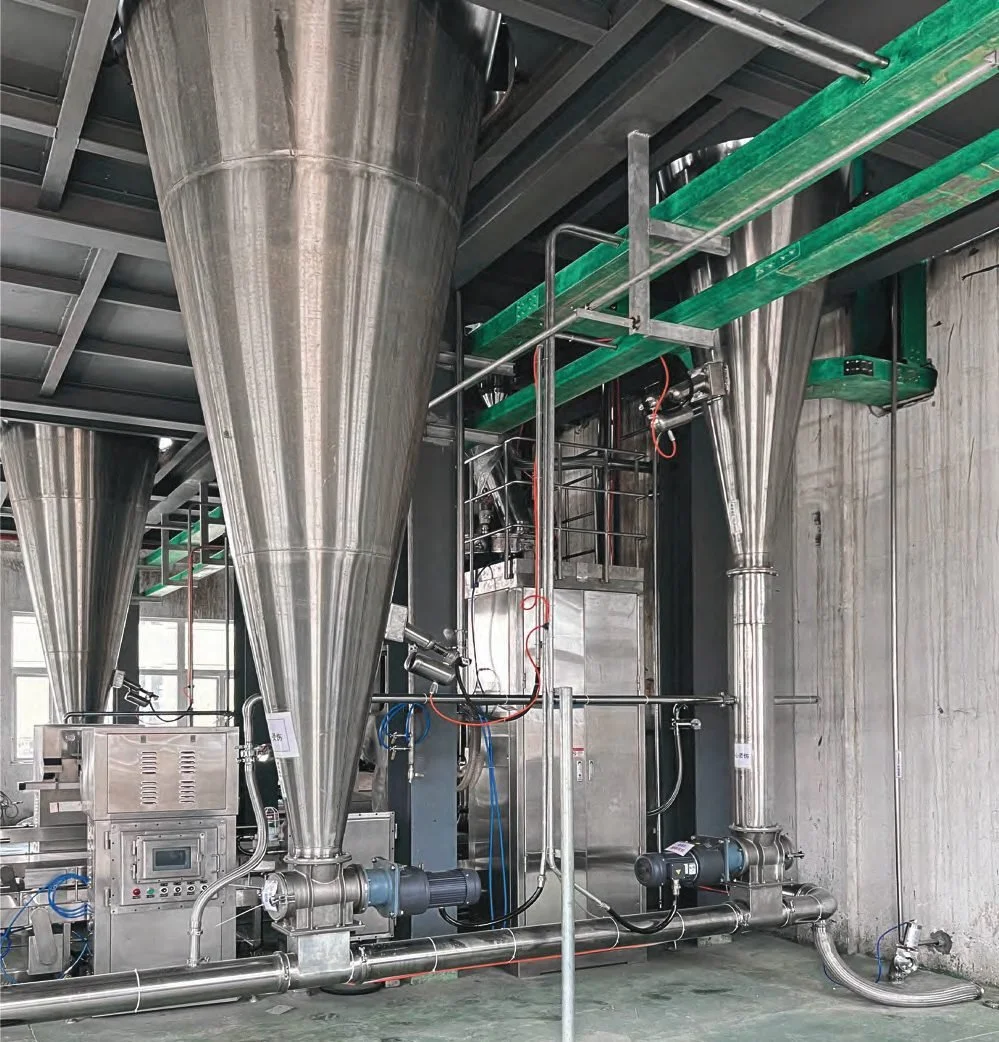
Spray drying granulation for alumina and other ceramic slurries. The dried granules flow well and pack densely, ready for dry pressing.
Why spray granulation
The standard route to pressing powder.
Alumina ceramic is the most widely used high-temperature structural ceramic. Dry pressing in mass production needs a powder with a set particle gradation, low moisture and little binder.
After ball milling, the slurry is spray dried and granulated to raise its flowability and bulk density. Spray granulation is now the basic method for both building ceramics and advanced ceramics.
Process
How the ceramic line works
| Feed preparation | Slurry pulped in a beater and filtered |
|---|---|
| Transport | High-pressure hose diaphragm pump |
| Atomization | Pressure spray gun or centrifugal atomizer |
| Hot air | Filtered air heated by a natural gas furnace, evened by a hot air distributor |
| Drying | Droplets solidify into granules in the tower |
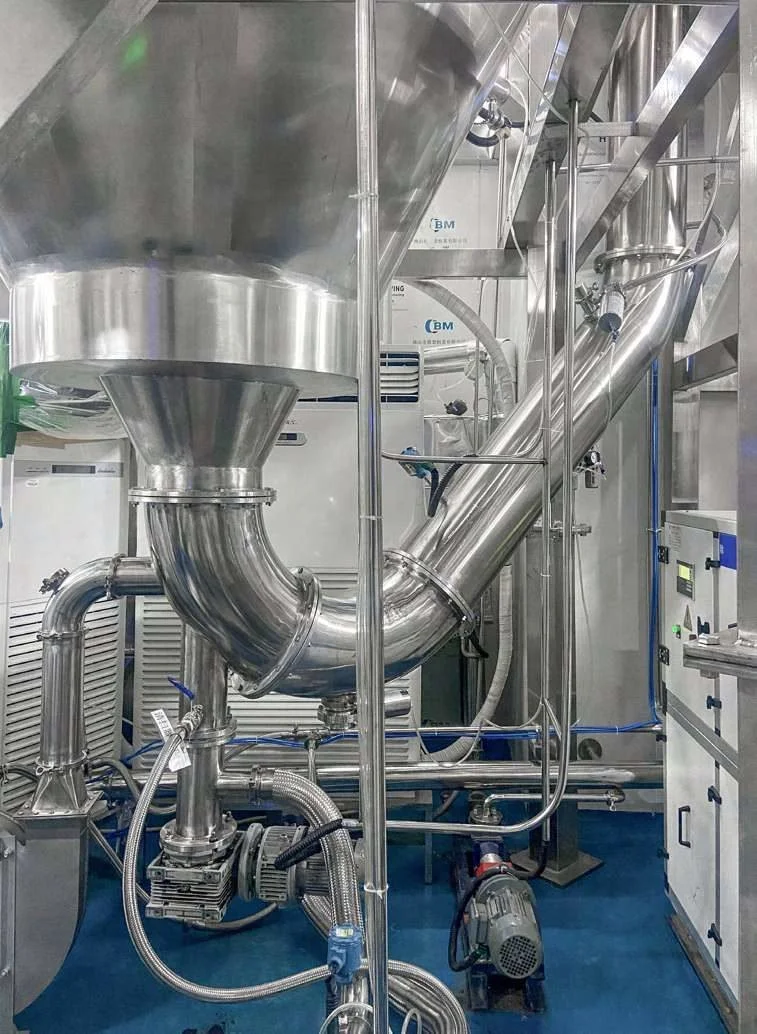
| Collection | Product from the tower bottom; fines from a secondary bag filter |
| Cleaning | CIP hose reel on top of the tower |
Source: Linzhou Dryer 2025 product brochure.
FAQ
Questions about this application
Pressure or centrifugal for ceramics?
Pressure nozzles give coarser, denser granules for pressing; centrifugal atomizers give finer powder. Both are used; the choice depends on the granule size you need.
Next step
Send us your material. We will size the dryer.
Tell us the material, solids content and the capacity you need. An engineer replies within one working day, and we can run a trial on your sample in our test center.